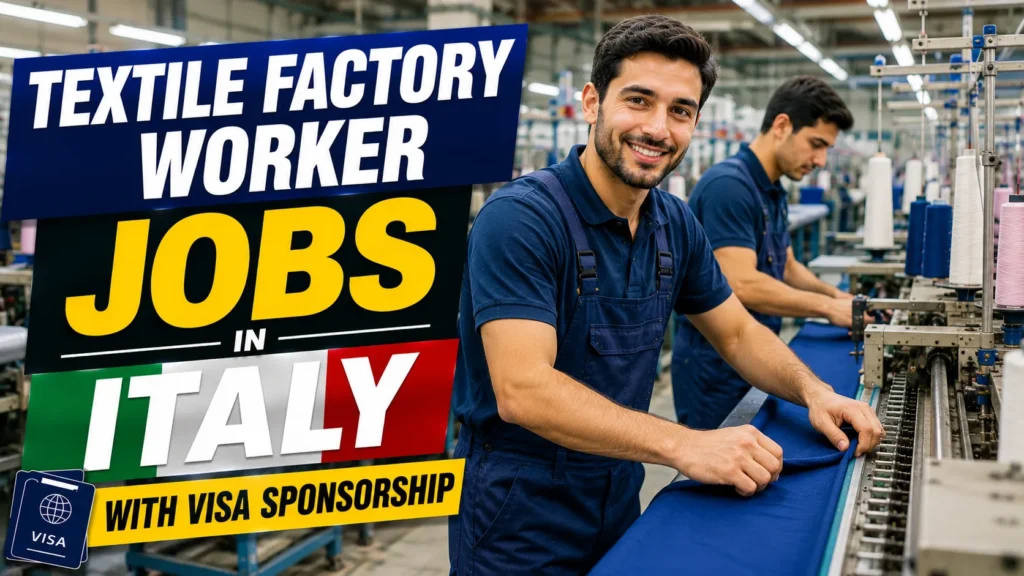
Textile Factory Worker Jobs in Italy with Visa Sponsorship 2026 offer excellent employment opportunities for individuals seeking stable careers in one of Europe’s most renowned textile and fashion industries. Italy is globally recognized for producing high-quality fabrics, garments, and luxury fashion products, creating consistent demand for factory workers across textile manufacturing facilities. Many employers recruit international workers through employer-sponsored work permits while offering competitive salaries, overtime opportunities, paid leave, professional training, and long-term career growth. Textile factories regularly hire workers to support fabric production, garment manufacturing, quality inspection, packaging, and warehouse operations.
Textile Factory Workers are responsible for operating production equipment, handling fabrics, assisting with garment manufacturing, inspecting finished products, packaging orders, and maintaining production efficiency. These positions are ideal for individuals who are hardworking, physically fit, and willing to work in a fast-paced manufacturing environment.
Job Details
| Country | Italy |
| Job Title | Textile Factory Worker Jobs |
| Minimum Education | High School Diploma |
| Minimum Experience | 2-3 Years |
| Visa Sponsorship | Yes |
| Who can Apply? | All Nationalities |
| Minimum Salary | EUR 30,000 – EUR 38,000 per year |
Why Choose Textile Factory Worker Jobs in Italy
Italy offers numerous benefits for Textile Factory Workers.
- Visa sponsorship opportunities
- Competitive annual salaries
- High demand in the textile and fashion industry
- Overtime earning opportunities
- Stable full-time employment
- Paid annual leave
- Professional training
- Modern manufacturing facilities
- Career advancement opportunities
- Valuable international work experience
- Accommodation assistance from many employers
- Safe working environments
Italy’s strong textile and garment manufacturing industry continues creating excellent employment opportunities for international workers.
Roles and Responsibilities of a Textile Factory Worker
Textile Factory Workers perform a variety of production duties.
- Operating textile production machines
- Handling fabrics and raw materials
- Feeding materials into production equipment
- Assisting with garment manufacturing
- Inspecting finished products for quality
- Folding and packaging finished garments
- Labelling products
- Maintaining production records
- Cleaning workstations
- Reporting equipment faults
- Following workplace safety procedures
- Meeting daily production targets
- Supporting warehouse operations
- Working as part of a production team
Also Check: Pizza Chef Jobs in Italy with Visa Sponsorship 2026
Types of Textile Factory Worker Jobs in Italy
Various textile manufacturing positions are available throughout Italy.
- Textile Factory Worker
- Garment Production Worker
- Sewing Machine Operator
- Fabric Cutter
- Textile Machine Operator
- Quality Control Inspector
- Garment Packer
- Fabric Finishing Worker
- Warehouse Assistant
- Production Line Worker
- Textile Assembler
- Embroidery Machine Operator
- Clothing Production Assistant
- Fabric Inspection Worker
- Textile Warehouse Operative
Experienced workers often advance into supervisory or quality control positions.
Eligibility Criteria for Textile Factory Worker Jobs
Applicants generally need to meet the following requirements.
- Minimum age of 18 years
- Valid passport
- Basic English communication skills
- Previous factory experience is preferred but not always required
- Good physical fitness
- Ability to stand for long hours
- Willingness to work shifts
- Basic teamwork skills
- Attention to detail
- Commitment to workplace safety
- Clean criminal background
Many employers provide on-the-job training for entry-level applicants.
Salary Expectations for Textile Factory Worker Jobs in Italy
Salaries vary depending on employer, location, experience, and overtime.
- Entry-Level Textile Factory Worker: EUR 14,000 – EUR 18,000 per year
- Experienced Textile Factory Worker: EUR 18,000 – EUR 24,000 per year
- Senior Production Worker: EUR 24,000 – EUR 30,000 per year
- Production Supervisor: EUR 30,000 – EUR 38,000 per year
Additional benefits may include:
- Visa sponsorship
- Overtime pay
- Paid annual leave
- Health insurance
- Accommodation assistance
- Performance bonuses
- Paid training
- Uniforms and safety equipment
- Career advancement opportunities
Top Employers Hiring Textile Factory Workers in Italy
Several organizations regularly recruit Textile Factory Workers.
- Textile manufacturing companies
- Garment factories
- Fashion manufacturers
- Fabric production companies
- Clothing export companies
- Luxury fashion manufacturers
- Textile processing plants
- Uniform manufacturers
- Home textile companies
- Industrial textile producers
These employers regularly recruit international workers to support production requirements.
Regions with High Demand for Textile Factory Worker Jobs
Employment opportunities are available throughout Italy.
- Milan
- Florence
- Prato
- Venice
- Bologna
- Turin
- Verona
- Brescia
- Como
- Vicenza
These regions have large textile manufacturing facilities and fashion production industries.
Skills Required for Textile Factory Worker Jobs
Successful Textile Factory Workers possess several valuable skills.
- Machine operation
- Attention to detail
- Quality inspection
- Teamwork
- Time management
- Manual dexterity
- Production line experience
- Packaging skills
- Basic problem-solving
- Communication skills
- Physical stamina
- Safety awareness
- Organization
- Adaptability
These skills help workers maintain productivity and product quality.
Application Process
Textile Factory Worker jobs in Italy follow a structured recruitment process for international applicants. Proper preparation significantly improves your chances of obtaining employment and visa sponsorship.
Step 1: Search for Verified Job Opportunities
Search for vacancies through textile manufacturers, garment factories, licensed recruitment agencies, and official employer career websites offering visa sponsorship opportunities.
Step 2: Prepare a Professional CV
Prepare a professional CV highlighting your factory experience, production skills, machinery knowledge, certifications, and previous employment. Include professional references whenever possible.
Step 3: Gather Required Documents
Prepare the following documents before applying.
- Valid passport
- Updated CV
- Educational certificates
- Work experience certificates
- Professional references
- Passport-sized photographs
- Police clearance certificate
- Medical examination report
Step 4: Submit Your Application
Submit your application through the employer’s official website, licensed recruitment agencies, or trusted Italian job portals. Ensure your CV and supporting documents are complete before submitting your application.
Step 5: Attend the Interview
Shortlisted candidates may attend an online or in-person interview. Employers generally assess your production experience, teamwork, communication skills, physical fitness, and understanding of workplace safety. Some employers may also conduct a practical skills assessment.
Step 6: Receive a Job Offer
Successful applicants receive an official employment contract outlining salary, working hours, overtime rates, accommodation support, paid leave, visa sponsorship details, and other employment conditions.
Step 7: Employer Begins Visa Sponsorship
After accepting the employment offer, the employer begins the work permit and visa sponsorship process according to Italian immigration regulations.
Step 8: Complete Medical and Background Checks
Applicants may complete medical examinations, police clearance, qualification verification, and document authentication before receiving final approval.
Step 9: Obtain Your Work Visa
Once your work visa is approved, you receive permission to travel and work legally in Italy. Carefully review your visa conditions before making travel arrangements.
Step 10: Travel to Italy and Begin Employment
Upon arrival, employees complete workplace orientation, safety training, production procedures, machinery instruction, and company induction before beginning their daily responsibilities.
Benefits of Textile Factory Worker Jobs in Italy
Textile Factory Worker jobs offer numerous benefits for international workers.
- Competitive salaries
- Visa sponsorship opportunities
- Overtime pay
- Stable employment
- Paid annual leave
- Accommodation assistance
- Professional training
- Modern manufacturing facilities
- Career advancement opportunities
- Performance bonuses
- Valuable international work experience
- Safe working environments
These benefits make Italy an attractive destination for factory workers seeking employment abroad.
Challenges of Textile Factory Worker Jobs
Although rewarding, Textile Factory Worker jobs also involve several challenges.
- Standing for long hours
- Repetitive production tasks
- Meeting daily production targets
- Shift work
- Working in fast-paced environments
- Maintaining product quality
- Following strict workplace safety procedures
- Handling fabrics and production materials
- Working overtime during busy production periods
- Adapting to manufacturing schedules
Workers who demonstrate reliability, attention to detail, teamwork, and strong work ethics often enjoy successful long-term careers within Italy’s textile and garment manufacturing industry.
Top Websites
Frequently Asked Questions
Do Textile Factory Worker jobs in Italy offer visa sponsorship?
Yes. Many textile manufacturers, garment factories, and clothing production companies sponsor qualified international workers based on employer requirements and Italian immigration regulations.
How much can Textile Factory Workers earn in Italy?
Most Textile Factory Workers earn between EUR 14,000 and EUR 38,000 per year, depending on experience, employer, location, position, and overtime opportunities.
Is previous experience required?
Most employers prefer candidates with factory or production experience. However, many entry-level positions are available, and employers often provide on-the-job training.
Do I need to speak Italian?
Not always. Many employers accept candidates with basic English communication skills. Learning basic Italian can improve workplace communication and future career opportunities.
Do employers provide accommodation?
Many employers provide accommodation assistance or help workers find affordable housing. Employment benefits vary depending on the employer and contract.
Can Textile Factory Workers build a long-term career in Italy?
Yes. Experienced workers can advance to positions such as Senior Production Worker, Machine Operator, Quality Control Inspector, Production Supervisor, or Factory Manager. Italy’s textile and fashion industry offers excellent long-term career opportunities.
Conclusion
Textile Factory Worker Jobs in Italy with Visa Sponsorship 2026 provide excellent opportunities for international workers seeking stable employment in one of Europe’s leading textile and fashion manufacturing industries. With competitive salaries, visa sponsorship, overtime opportunities, accommodation assistance, professional training, and strong demand across garment and textile production facilities, Italy remains an attractive destination for foreign workers. Individuals with a strong work ethic, attention to detail, and willingness to learn can build rewarding long-term careers while gaining valuable international manufacturing experience.